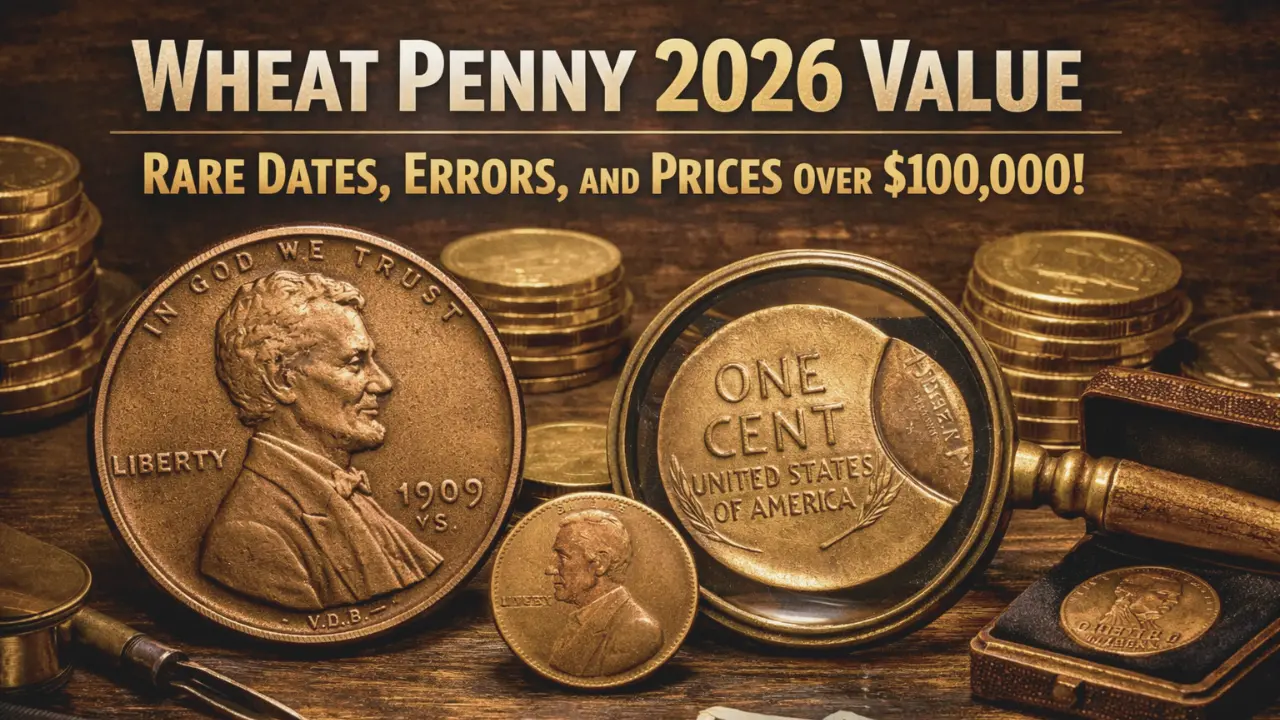
Wheat Penny 2026 Value: The Wheat Penny 2026 value is attracting attention from both collectors and investors. Wheat pennies, officially known as Lincoln Wheat Cents, were minted by the United States Mint from 1909 to 1958. Their continued popularity is due to their historical significance, the few surviving examples in high grades, and the significant interest in early 20th-century numismatics. Although production of the Wheat Penny ceased long ago, the number of collectors inquiring about its value in 2026 is increasing, especially given recent market trends and auction results.
The Historical Roots of the Wheat Penny
The introduction of the Wheat Penny in 1909 marked the first time Abraham Lincoln appeared on a regular-circulating U.S. coin. Designed by Victor David Brenner, the coin features Lincoln’s portrait on the obverse and the famous wheat stalks on the reverse. Initial mintages were high, but due to decades of wear and tear, many dates now survive primarily in lower grades. This decline in upper grades is a major factor in the 2026 value.
Factors Influencing the Wheat Penny 2026 Value
Many factors influence the 2026 Wheat Penny value today. Condition, rarity, date, mint mark, and historical context all play a significant role. Coins graded by professional services like PCGS or NGC that achieve high grades (MS65 or above) can fetch significantly higher prices than worn, ungraded coins. Additionally, certain mint marks, such as “D” for Denver or “S” for San Francisco, can increase their value when combined with a low mintage.
Specific Dates and Their 2026 Values
The Wheat Penny’s 2026 value varies greatly depending on the year and mintmark. For example, early years like the 1909-S VDB are always the most valuable. Mid-production rarities from the 1930s and 1940s also continue to command good value today, as mintages are lower today or quality is lower. The table below shows the 2026 value ranges for some dates:

| Year & Mint Mark | Typical Value in Good (G4) | Typical Value in Uncirculated (MS60) | High Grade Premium (MS65+) |
|---|---|---|---|
| 1909-S VDB | $900 | $3,500 | $75,000+ |
| 1914-D | $600 | $4,000 | $42,000 |
| 1922 No D | $150 | $2,700 | $80,000+ |
| 1931-S | $40 | $700 | $9,000 |
| 1955 Double Die | $200 | $1,000 | $12,000 |
| 1943 Copper (error) | $4,000+ | $23,000+ | $120,000+ |
This table shows a wide range; specific prices may fluctuate in 2026 depending on market conditions and grading trends.
Market Trends Influencing 2026 Prices
In 2026, Wheat Penny prices are determined by both long-term numismatic trends and larger economic forces. Over the past ten years, strong demand for classic coins and an increase in online auction participants have driven prices higher. Young collectors entering the hobby have also generated renewed demand for famous issue and error coins. Conversely, economic uncertainty can sometimes reduce speculative buying, leading to temporary price stability for certain dates.
The Role of Errors and Variety
Errors and variety significantly impact the price of the 2026 Wheat Penny. Coins with die cracks, off-center strikes, or large doublings are often more valuable than standard issue coins. The famous 1955 doubled die obverse is one of the most sought-after varieties, with high grades attracting fierce bidding at auction. Misprinted coins, such as the 1943 copper strikes, which were accidentally produced during wartime steel cent production, often command a premium price due to their extreme rarity.
Grading and Its Impact on Value
Professional coin grading plays a key role in determining the value of the 2026 Wheat Penny. Coins submitted to a grading service are evaluated based on strike quality, surface protection, luster, and overall visual appeal. A coin graded MS64 by a reputable service can be worth several times more than a coin of the same date in uncertified condition. As grading standards change, collectors are increasingly relying on third-party opinions to validate value, especially for high-end pieces.

Investment Perspectives in 2026
While many collectors purchase wheat pennies for the fun of vintage, others consider them part of a larger investment strategy. In 2026, data shows that the value of certain wheat pennies has increased relative to other collectible assets over the past ten years. Rare high-grade coins and coins with special errors often outperform common-date cents. However, long-term success requires knowledge of rarity, grading standards, and market demand, rather than simply predictable timing.
Common Misconceptions About Value
Many misconceptions persist about the 2026 wheat penny value. One common misconception is that all old coins are valuable solely because of their age. In reality, most wheat pennies are only worth a few dollars unless they are rare or in excellent condition. Another misconception is that wear in circulation destroys all value; While worn coins are less valuable, some rare-date coins retain their value even in highly worn grades.
How Auctions Reflect Value Trends
Live and online auctions remain the primary venue for determining Wheat Penny prices in 2026. High-profile sales, especially for rare-date or premium-grade coins, often set new market benchmarks. Many collectors track auction records to gauge demand and adjust their buying or selling strategies. Auction houses specializing in numismatics provide detailed catalogs that help authenticate rarity and provenance—both of which support value.
Conclusion
The Wheat Penny 2026 Value continues to reflect the dynamic intersection of history, collector demand, and market forces. While common-date coins command lower values, exceptional rarities and well-preserved examples can command substantial premiums. Whether considered a hobbyist’s passion or part of a diversified collectible portfolio, Wheat Pennies remain a beloved and financially attractive part of American numismatics. With careful study and awareness of grading standards, collectors in the U.S. can navigate the 2026 landscape with confidence and insight.