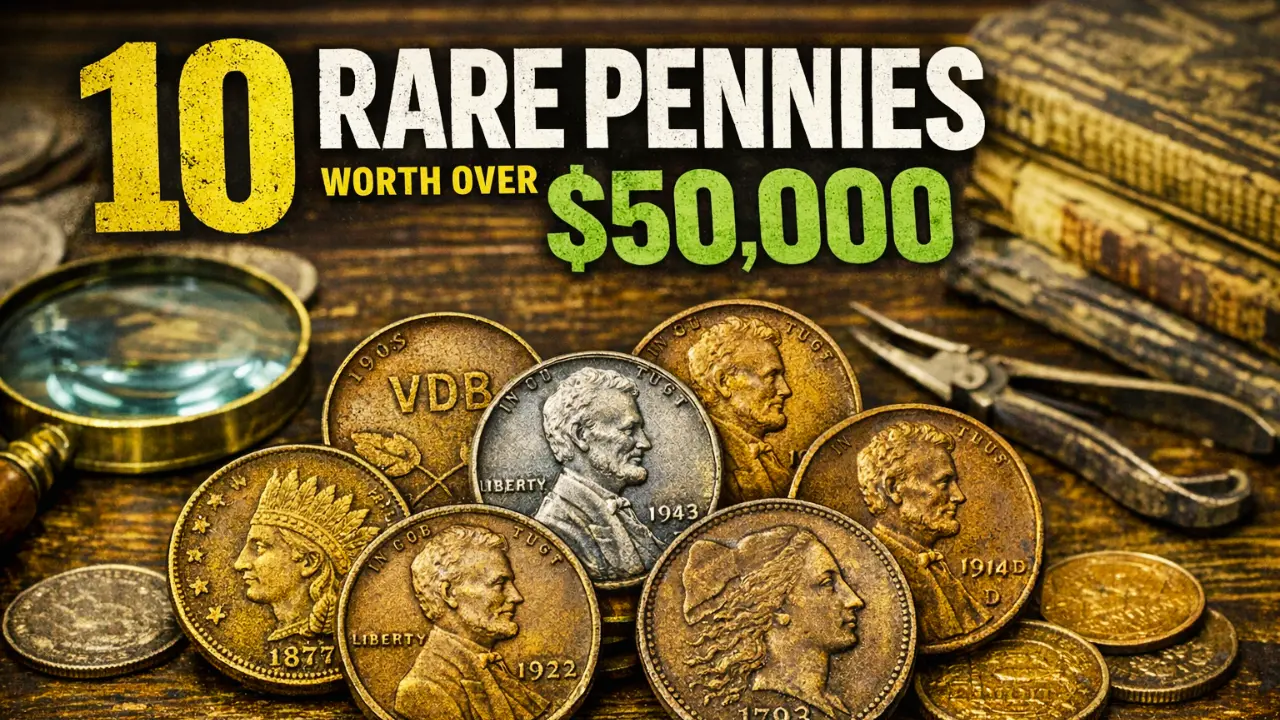
10 Rare Pennies Worth Over $50,000: The 10 rare pennies worth over $50,000 aren’t just collectors’ imaginations—they’re a documented reality in the U.S. coin market. Some Lincoln cents and early American pennies have sold for more than luxury cars, and in some cases, even houses. These high prices are due to minting errors, low production, and historical significance. Unlike gold or silver bullion, these coins’ value is driven by scarcity, condition, and collector demand, not just their metal content. Some of these pennies were accidentally introduced into circulation, making them less likely to be found but genuine.
Why Some Pennies Become So Valuable
Pennies become valuable primarily due to rarity, errors, and demand from serious collectors. Coins struck in very small numbers or with significant minting defects become instantly coveted. Condition plays a significant role. A well-kept penny can be worth ten times more than the same coin when worn. Auction records show that top-grade rare pennies regularly surpass the $50,000 mark, while elite examples command over $500,000. These prices are supported by professional grading services and decades of verified sales history.
The Role of Mint Errors in High Values
Mint errors are among the biggest factors determining penny prices. Errors like double strikes, off-metal planchets, and die doubling create coins that were never intended to exist. Because modern minting is highly automated, major errors are rare, driving demand. A penny with a major error can sell for more than 100,000 times its face value. Collectors consider these coins accidental masterpieces, giving them premium status in the market.
Historical Pennies That Created Coin Collecting
Some pennies are valuable not because of flaws but because of their historical significance. Early American pennies from the 18th and early 19th centuries were produced in small quantities and often circulated widely. Surviving high-grade examples are rare. These coins are the foundation of U.S. currency, and their age alone significantly increases their value. When combined with their low survival rate, they can easily fetch over $50,000.

Record-Breaking Penny Auction Prices
Major auction houses regularly document six-figure penny sales. In recent decades, rare cents have sold for prices ranging from $60,000 to over $1.7 million. These sales are not isolated events but part of a robust and persistent collector market. Prices have been steadily rising, especially for authenticated and graded coins whose rarity has been proven.
Top 10 Rare Pennies Worth Over $50,000
The table below lists ten famous pennies known to exceed $50,000 in top condition:
| Penny Name | Year | Key Feature | Estimated Value |
|---|---|---|---|
| Lincoln Wheat Penny (Copper Error) | 1943 | Struck on copper instead of steel | $100,000 – $1,000,000 |
| Lincoln Penny (Steel Error) | 1944 | Struck on steel instead of copper | $75,000 – $500,000 |
| Doubled Die Lincoln Cent | 1955 | Strong doubling on date and lettering | $50,000 – $125,000 |
| Aluminum Lincoln Penny | 1974 | Experimental aluminum planchet | $75,000 – $250,000 |
| Lincoln Penny (Bronze Error) | 1943-D | Bronze instead of steel | $200,000+ |
| Indian Head Penny | 1877 | Low mintage year | $60,000 – $150,000 |
| Lincoln Penny (Double Die Reverse) | 1969-S | Dramatic doubling on reverse | $50,000 – $100,000 |
| Lincoln Penny (No Mint Mark Proof) | 1990-S | Missing mint mark | $50,000 – $75,000 |
| Large Cent | 1793 | First year U.S. penny | $80,000 – $500,000 |
| Lincoln Penny (Copper Error) | 1943-S | Copper planchet error | $150,000+ |
Why Condition Is So Important
Condition is graded on a standard scale from poor to mint state. A penny with sharp details, no rust, and minimal wear can be worth many times more than a worn coin. For example, a 1955 Doubled Die penny in circulated condition may sell for $1,500, but in top-grade mint condition, it can fetch over $100,000. This difference illustrates why preservation is crucial in determining final value.
Supply vs. Demand in the Rare Penny Market
Many rare pennies exist in quantities of fewer than 20 confirmed pieces. Additionally, thousands of collectors actively compete for ownership. This imbalance keeps prices high and stable. Even during economic downturns, top-tier rare coins retain value better than many traditional investments.

Long-Term Value Growth Trends
Historical pricing data shows that the value of rare U.S. pennies has increased by an average of 7% to 12% annually over the past several decades. Coins with strong authenticity and certification often outperform this range. This growth is driven by the growing collector community, international buyers, and increasing interest in tangible assets.
How Authentication Protects Value
Authentication by professional grading companies ensures that a penny is genuine and properly graded. Coins without certification often sell at a significant discount due to the risk of counterfeiting. Certified coins typically command a price 20% to 40% higher than similar uncertified coins.
Why Rare Pennies Remain a Strong Collectible Asset
Rare pennies combine history, scarcity, and tangible value in one small object. Unlike stocks or digital assets, they are physical items that are always in demand from collectors worldwide. Limited supply ensures that once a rare penny enters a private collection, it may not reappear on the market for decades, further strengthening its value.
Final Words
Ten rare pennies worth over $50,000 prove that even the smallest coin can hold immense value. These pennies aren’t myths or internet hype—they’re verified by auction results and collector records. While finding a penny in everyday change is extremely difficult, the fact that it’s possible compels millions of Americans to keep checking their remaining coins. For those who own a penny, it’s not just money, but a piece of American history worth preserving.